
Wearable-Free Fall Detection for HCBS Participants Living Alone
A fall alert should not depend on the participant pressing a button.
When an HCBS participant falls while alone, they may be injured, disoriented, unconscious, or physically unable to reach a phone or activate a medical alert button. A wearable can only help when it is being worn, charged, accessible, and successfully activated.
Zemplee provides passive, wearable-free and camera-free fall detection inside the participant’s home. Ambient sensors monitor movement and activity without requiring the participant to wear, charge, or remember a device. When a potential fall is detected, Zemplee’s smart alerting system can notify the appropriate caregiver or care team so the participant can be checked promptly.
This creates an additional safety layer between caregiver visits—particularly for participants who live alone, have cognitive impairment, or may not reliably use a pendant or personal emergency response device.
Fall prevention is one part of a broader strategy for helping HCBS participants remain safely supported in their homes and communities.
Why Wearable Fall-Alert Devices Can Leave Gaps
Wearable medical alert devices can be valuable, but they depend on the participant having the device available and being able to use it. For an HCBS participant living alone, that may not always happen.
- The device is not being worn
Pendants and watches may be removed during sleep, bathing, dressing, or charging. - The participant forgets the device
Memory loss or cognitive impairment can make consistent use difficult. - The device is out of reach
After a fall, the participant may be separated from a phone, pendant, or charging station. - The participant cannot activate it
An injury, loss of consciousness, confusion, or physical limitation may prevent a button press. - The device is not charged
Wearable protection can lapse when batteries run down or charging routines are missed
The problem is not necessarily the wearable itself. The problem is making the participant responsible for activating the safety system during an emergency. Wearable-free fall detection adds a passive layer of protection that continues working without requiring the participant to remember or take action.
How Wearable-Free Fall Detection Works
Zemplee uses ambient sensors placed inside the participant’s home to monitor movement and activity without cameras and without requiring the participant to wear a device.
When the system identifies a potential fall:
- The event is detected passively
The participant does not need to press a button, reach a phone, or call for help. - The event is evaluated
Zemplee’s smart alerting system processes the sensor information to identify a potential fall requiring attention. - The designated responder is notified
An alert can be sent to the appropriate caregiver, family member, or care team based on the organization’s response workflow. - The participant can be checked
The responder can follow the organization’s established protocol to verify the participant’s condition and determine what assistance is needed.
No Cameras. No Wearables. No Button Press.
Zemplee provides fall-detection coverage while preserving privacy and reducing the burden placed on the participant. There is nothing to wear, charge, remember, or activate.
What Is a “Long Lie” After a Fall?
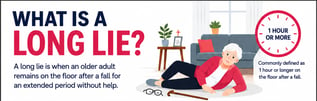
When an older adult falls while alone, the danger may extend beyond the fall itself. Remaining on the floor for an extended period—commonly referred to in falls research as a long lie—can increase the risk of complications and makes timely awareness especially important. Download our one-page infographic explaining long lies, associated risks, why falls may go undetected, and how passive fall detection can help caregivers become aware sooner.
Why Falls Are More Dangerous When a Participant Lives Alone
When a fall is witnessed, someone can assess the situation and arrange help. When an HCBS participant falls while alone, the event may remain undetected—particularly if the participant cannot reach a phone or activate an alert device.
The danger may extend beyond the initial fall. Remaining on the floor for an extended period is commonly known as a long lie. Prolonged time on the floor can increase the risk of:
- Dehydration
- Pressure injuries
- Hypothermia
- Rhabdomyolysis
- Psychological distress
- Loss of mobility
- Hospitalization and functional decline
Wearable-free fall detection can help reduce dependence on the participant initiating the alert. Earlier awareness gives the designated responder an opportunity to check on the participant before an unwitnessed fall becomes a prolonged long lie.
Wearable vs. Wearable-Free Fall Detection
Both approaches can provide valuable protection. The key difference is whether detection depends on the participant consistently using a device.
| Capability | Wearable alert device | Zemplee wearable-free detection |
| Participant must wear a device | Usually | No |
| Participant must remember the device | Usually | No |
| Charging may be required | Often | No wearable to charge |
| Button press required | Common with traditional pendants | No |
| Works if the participant cannot activate an alert | Depends on the device | Yes, for a detected potential fall |
| Uses cameras | No | No |
| Passive monitoring | Varies | Yes |
| Provides daily activity context | Varies | Yes |
The Goal Is More Reliable Coverage
Wearable-free fall detection is particularly useful for participants who may forget, remove, refuse, or be unable to activate a wearable. It can also complement an existing medical alert device by providing another safety layer when the participant is alone.
Who May Benefit From Wearable-Free Fall Detection?
Wearable-free detection may be especially valuable for HCBS participants who:
- Live alone or spend extended periods without a caregiver present
- Are experiencing cognitive decline, memory loss, or dementia
- May forget to wear, charge, or carry a medical alert device
- Remove or refuse to wear pendants and other wearable devices
- Have previously fallen or are at increased risk of falling
- May be unable to press a button after a fall
- Experience nighttime mobility or frequent bathroom visits
- Have recently returned home following hospitalization or rehabilitation
Supporting Participants Experiencing Cognitive Decline
Participants experiencing cognitive decline may not remember to wear a pendant, understand why it is needed, or know how to activate it during an emergency. Some may remove or misplace the device without a caregiver knowing.
Wearable-free fall detection removes those requirements. It provides a passive safety layer without asking the participant to remember, charge, wear, or activate anything.
An Additional Safety Layer Between Caregiver Visits
Wearable-free fall detection does not replace caregivers, clinical fall-risk assessments, or emergency-response protocols. It extends visibility into periods when the participant is alone and might otherwise have no way to communicate that a fall has occurred.
What Happens When a Potential Fall Is Detected?
Wearable-free detection is only useful when it leads to an appropriate response. Zemplee helps HCBS organizations route potential fall alerts to the designated people based on the program’s established workflow.
- A potential fall is detected
The participant does not need to press a button, reach a phone, or call for help. - The designated responder is alerted
Notifications can be directed to an authorized caregiver, family member, monitoring team, or HCBS care team. - The participant is checked
The responder follows the organization’s protocol to verify the participant’s condition and determine whether assistance is needed. - The event can be reviewed
Activity information surrounding the event may provide useful context for follow-up, care-plan review, and fall-risk assessment.
From Detection to Follow-Up
After the participant’s immediate safety has been addressed, the care team can consider what may have contributed to the fall. This may include changes in mobility, nighttime activity, bathroom routines, medication, illness, or recovery following hospitalization.
Zemplee does not diagnose the cause of a fall or replace clinical judgment. It provides additional information that can help the care team ask better questions and determine whether further assessment or intervention is appropriate.
Frequently Asked Questions About Wearable-Free Fall Detection
Can a fall be detected without the participant wearing a device?
Yes. Zemplee uses ambient sensors installed in the home to detect a potential fall without requiring the participant to wear, charge, or activate a device. No button press is required.
How is wearable-free fall detection different from detection from a medical alert pendant?
A traditional medical alert pendant generally depends on the participant wearing the device and pressing a button. Zemplee monitors passively, so detection does not depend on the participant remembering the device or being physically able to activate an alert.
Does Zemplee use cameras to detect falls?
No. Zemplee’s ambient monitoring is camera-free. It provides information about movement and activity without capturing video of the participant or the inside of the home.
Can wearable-free detection help participants experiencing cognitive decline?
Yes. A participant experiencing cognitive decline may forget to wear, charge, or activate a medical alert device. Wearable-free detection removes these requirements and provides a passive safety layer without asking the participant to remember or operate anything.
Does wearable-free detection replace caregivers or emergency services?
No. Zemplee provides an additional layer of visibility when a participant is alone. It does not replace caregivers, clinical assessment, emergency services, or the HCBS organization’s established response procedures.
Who receives an alert after a potential fall?
Alerts can be routed to the responder designated by the HCBS organization’s workflow, such as an authorized caregiver, family member, monitoring team, or care-team member. That responder can then check on the participant and determine what assistance is needed.
Protect Participants Without Asking Them to Wear Anything
HCBS participants should not have to remember a device or press a button for someone to become aware of a potential fall.
Zemplee provides passive, wearable-free and camera-free fall detection for participants who live alone, spend time without a caregiver present, or may be unable to use a traditional medical alert device reliably.
Extend your program’s safety coverage between caregiver visits and help designated responders become aware of potential falls sooner.