
What to Do After a Resident Falls.
After a resident falls, the immediate priority is resident safety and appropriate clinical assessment. But an effective post-fall response should go beyond the incident itself. Care teams should investigate what may have contributed to the fall, review recent changes in the resident’s health, mobility, medications, cognition, toileting, sleep, activity patterns, and environment, and determine whether the care plan needs to change.
A fall can provide important information about a resident’s changing needs. Understanding what happened before, during, and after the fall can help care teams identify contributing factors, provide appropriate support, and reduce the risk of another fall.
Immediate Steps After a Resident Falls
After a fall, staff should first address the resident’s immediate safety and follow the community’s established post-fall and clinical assessment protocols. Depending on the circumstances, this may include evaluating the resident for injury, obtaining appropriate clinical assessment, documenting the incident, and notifying the appropriate clinical team, family members, or other parties according to community policy.
Once the resident’s immediate needs have been addressed, the next question should be: what may have contributed to the fall? Looking beyond the incident itself can help the care team identify potentially modifiable factors and determine whether the resident’s level of support or care plan should change.
A post-fall response should do more than document the event. Understanding what changed before and after the fall is an important part of a comprehensive fall prevention strategy for senior living communities and can help care teams reduce the risk of another fall.
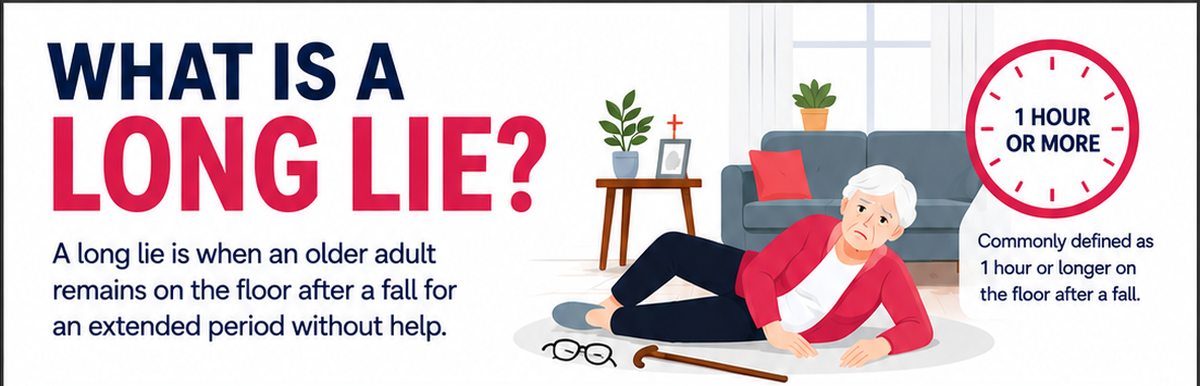
What Is a “Long Lie” After a Fall?
Look for Contributing Factors, Not Just the Fall
A post-fall review should consider the circumstances surrounding the fall as well as changes that may have occurred beforehand. The goal is not simply to document where and when the resident fell, but to understand whether health, functional, behavioral, medication-related, or environmental factors may have contributed.
-
Mobility, strength, and balance changes
Consider whether the resident has become less steady, weaker, less active, or is having greater difficulty walking or transferring.
-
Medication changes
New medications, dosage changes, or combinations of medications may warrant review when evaluating dizziness, alertness, blood pressure, balance, or mobility.
-
Changes in health status
Illness, pain, weakness, dizziness, dehydration, or other changes in the resident’s condition may provide important context.
-
Cognitive or behavioral changes
New confusion, disorientation, restlessness, or changes in usual behavior may affect how safely a resident navigates their environment.
-
Changes in toileting
New or worsening nocturia, urinary urgency, urinary frequency, incontinence, or increased bathroom trips may contribute to more frequent or hurried movement, particularly at night.
-
Sleep and nighttime activity
Increased bed exits, disrupted sleep, or unusual nighttime movement may provide context about what was occurring before the fall.
-
Environmental factors
Lighting, flooring, obstacles, footwear, assistive devices, furniture placement, and accessibility of frequently used areas should be considered.
-
Recent hospital or emergency department discharge
Changes in strength, mobility, medications, cognition, or routines following acute care may affect a resident’s needs after returning to the community.
Review What Changed Before the Fall
An incident report captures what happened at or immediately after a fall, but understanding the period before the event can provide additional context. Changes in movement, sleep, nighttime activity, bathroom patterns, time spent in bed or a chair, or overall daily routines may help care teams understand whether the resident’s condition or behavior had been changing before the fall.
For example, a resident may have begun getting out of bed more frequently at night, making more bathroom visits, moving less during the day, or spending more time in bed or a chair. Another resident may have recently returned from a hospital or emergency department visit and not yet returned to their previous activity baseline. These patterns do not establish what caused a fall, but they can provide useful information for the care team’s post-fall assessment.
Looking at what changed before the event can help shift post-fall review from documenting an isolated incident toward understanding the resident’s changing needs over time.
Post-Fall Documentation, MDS and Regulatory Requirements
Post-fall documentation and reporting requirements depend on the type of senior living community and applicable state and federal regulations. Communities should follow their established post-fall protocols, state requirements, and applicable assessment and reporting standards.
For Medicare- and Medicaid-certified nursing facilities, the CMS Minimum Data Set (MDS) 3.0 Resident Assessment Instrument includes specific guidance for documenting falls and fall-related injuries. Section J1900 requires facilities to consider falls occurring during the assessment look-back period, review relevant incident reports and clinical records, and classify falls according to the level of injury. Follow-up information received after the event may also be relevant when determining the complete impact of a fall.
These requirements reinforce an important principle for post-fall care: a fall should not be viewed only as an isolated incident. Documentation, assessment, contributing factors, changes in resident condition, and appropriate care-plan interventions all form part of understanding and responding to fall risk.
Update the Care Plan After a Fall
A post-fall assessment should inform the resident’s ongoing care when meaningful contributing factors or changes are identified. Care teams should review medications that may affect balance, blood pressure, alertness, or mobility; update the resident’s fall-risk assessment when applicable; and consider whether a new or updated occupational therapy (OT) or physical therapy assessment is appropriate. Depending on the resident’s needs and the community’s clinical protocols, the team may also consider changes to mobility support, toileting assistance, environmental safety, observation, or other interventions.
Changes from the resident’s previous baseline can also provide useful context for care planning. If the resident has become less active, is getting out of bed more frequently, has developed new toileting patterns, is sleeping differently, or has not returned to their previous routine after a hospitalization or illness, those observations can help the care team determine whether additional support is appropriate.
The care plan should then become part of an ongoing feedback loop: implement appropriate interventions, continue observing the resident, and assess whether patterns return toward baseline or whether additional changes are needed.
How Zemplee Supports Post-Fall Monitoring
Zemplee uses passive, camera-free monitoring to give senior living care teams longitudinal context around a resident’s activity patterns before and after a fall. Patterns in movement, nighttime activity, bathroom visits, sleep, and time spent in bed or a chair can help staff understand what was changing before the incident and how the resident’s routine changes afterward.
After a fall, continued monitoring can help care teams understand whether a resident is returning toward their previous baseline or developing new patterns that may warrant attention. For example, reduced movement, increased time in bed or a chair, more frequent nighttime activity, or changes in bathroom patterns can provide additional context as the resident recovers.
Zemplee does not determine the cause of a fall or replace clinical assessment. Instead, it provides additional information that care teams can use alongside post-fall assessment, documentation, and care planning to make more informed decisions about the resident’s ongoing needs.
Evidence From Senior Living: Fewer Falls With Passive Monitoring
In a six-month study at St. John’s Lutheran Community in Albert Lea, Minnesota, assisted-living residents using Zemplee experienced 9 total falls compared with 82 falls among residents in the control group—approximately 9× fewer falls. Both groups lived on the same floors and received care from the same staff.
The Zemplee group achieved these observed outcomes using passive monitoring without cameras or wearable devices. The study also reported that unwitnessed falls were approximately 8× more common among non-Zemplee residents, while all fall-related injuries and hospitalizations occurred in the control group. The Zemplee cohort had higher prevalence of several fall-related and cognitive diagnoses at baseline.
Frequently Asked Questions About What to Do After a Resident Falls
What should senior living staff do immediately after a resident falls?
The immediate priority after a fall is resident safety and appropriate clinical assessment. Staff should follow the community’s established post-fall protocols, assess the resident according to their scope and procedures, document the incident, and make required notifications. Once immediate needs are addressed, the care team should investigate potential contributing factors and determine whether the resident’s care plan, fall-risk assessment, medications, or level of support should be reviewed.
What should care teams review after a resident falls?
After addressing the resident’s immediate needs, care teams should review factors that may have contributed to the fall, including changes in mobility and balance, medications, health status, cognition, toileting patterns, sleep, nighttime activity, and the resident’s environment. The team should also consider whether the resident’s fall-risk assessment should be updated and whether an occupational therapy (OT), physical therapy (PT), medication, or other clinical review is appropriate. Changes from the resident’s normal baseline before the fall can provide additional context for that assessment.
Should a resident’s care plan be updated after a fall?
A fall should prompt the care team to consider whether the resident’s care plan still reflects their current needs. If the post-fall assessment identifies changes in mobility, medications, toileting needs, cognition, health status, environment, or daily activity patterns, the team may need to update appropriate interventions or levels of support. Continued observation can then help determine whether the resident is returning toward their previous baseline or whether further changes are needed.
What should be documented after a resident falls?
Post-fall documentation should follow the community’s policies and applicable state and federal requirements. Documentation may include the circumstances of the fall, assessment findings, injuries, notifications, potential contributing factors, interventions, and changes to the resident’s care plan or level of support. For Medicare- and Medicaid-certified nursing facilities, applicable CMS MDS requirements should also be followed when documenting falls and fall-related injuries.
How can passive monitoring support care teams after a resident falls?
Passive monitoring can provide additional context about a resident’s activity patterns before and after a fall. Changes in movement, nighttime activity, bathroom visits, sleep, or time spent in bed or a chair can help care teams understand whether the resident is returning toward their previous baseline or developing new patterns that warrant attention. This information can support—but does not replace—clinical assessment, post-fall documentation, and care-plan decisions.
Explore Fall Prevention in Senior Living
Learn how senior living communities can recognize changing fall risk, improve care-team visibility, and take a more proactive approach to resident safety.

Strengthen Your Post-Fall Response
Connect with our team to see how Zemplee can give care teams additional context before and after a fall, support ongoing monitoring, and help inform more proactive care-plan decisions.