
What Is a “Long Lie” After a Fall?
When an older adult falls while alone, the danger may extend beyond the fall itself. Remaining on the floor for an extended period—commonly referred to in falls research as a long lie—can increase the risk of complications and makes timely awareness especially important. Download our one-page infographic explaining long lies, associated risks, why falls may go undetected, and how passive fall detection can help caregivers become aware sooner.
How can Zemplee help prevent falls among HCBS participants living at home?
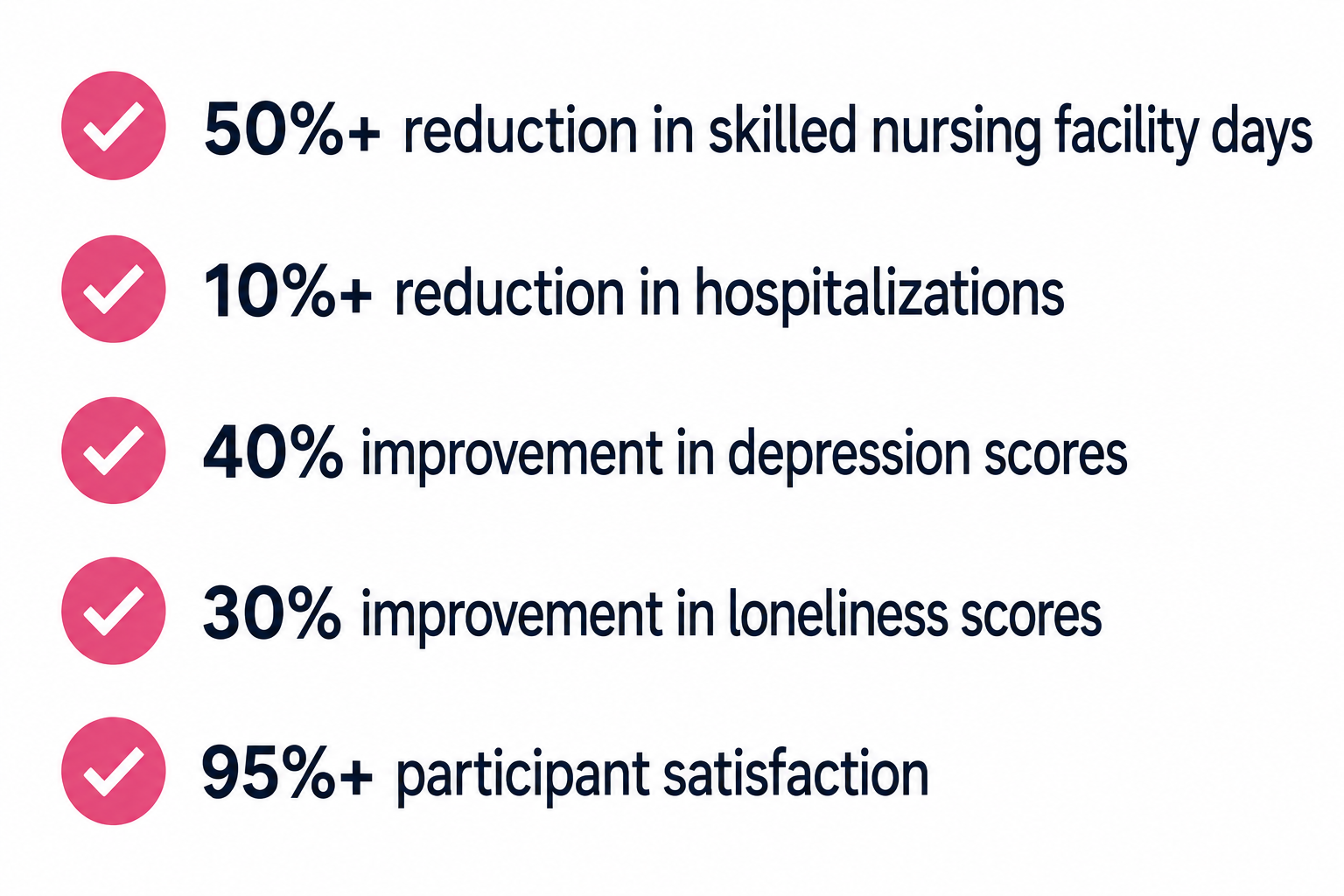
Zemplee helps HCBS care teams identify changes that may indicate increasing fall risk before a serious event occurs. Attentive AI™ continuously evaluates changes in mobility, activity, nighttime movement, bathroom routines, and other daily patterns against each participant's individual baseline.
When meaningful changes are detected, Zemplee's smart alerting system can notify caregivers and care teams so they can assess what has changed and determine whether additional support or intervention is appropriate. This extends fall-prevention visibility beyond scheduled caregiver visits and helps care teams move from simply responding to falls toward identifying risk earlier.
Can Zemplee detect a fall if an HCBS participant is not wearing a device?
Zemplee provides wearable-free fall detection without requiring the participant to wear, charge, or activate a device. Ambient sensors monitor activity and movement in the home, allowing potential fall events and unusual periods of inactivity to be identified even when the participant is unable to press a button or call for help.
What happens after a potential fall?
When Zemplee detects a potential fall or other significant safety event, its smart alerting system can notify the appropriate caregiver or care team so the participant can be checked promptly. Because the monitoring is passive, the participant does not need to locate a phone, press an emergency button, or activate a wearable to initiate the alert.
The event also becomes part of the participant's broader activity history, giving care teams additional context about what was happening around the event and whether other changes in mobility, activity, sleep, bathroom routines, or daily patterns may warrant follow-up.
The goal is not only faster awareness of a fall, but also better information to help the care team and emergency responders understand what may have changed, reasons for the fall to help with root cause analysis, and then use that information to reduce the risk of another fall.
Why is rapid fall detection important for an HCBS participant living alone?
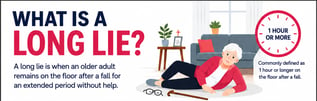
When an older adult falls while alone, one of the greatest risks is not only the fall itself but remaining on the floor for an extended period without help. In falls research, remaining on the floor for an hour or longer is commonly described as a “long lie.”
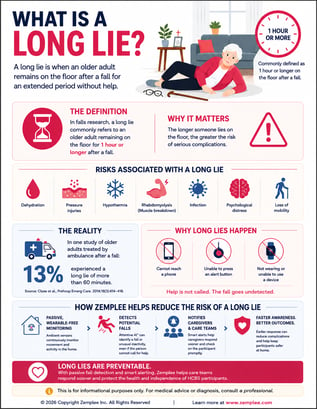
Share or print this one-page guide explaining what a long lie is, why it matters after an older adult falls, and how earlier fall detection can help reduce the risk of prolonged time on the floor.
Prolonged time on the floor has been associated with complications including dehydration, pressure injuries, hypothermia, rhabdomyolysis, psychological distress, and loss of mobility.
Zemplee's passive, wearable-free fall detection provides an additional safety net for HCBS participants who may be alone when a fall occurs. Because detection does not depend on the participant pressing a button, reaching a phone, or activating a wearable, Zemplee can alert caregivers or care teams to a potential fall even when the participant is unable to call for help.
Faster awareness can help caregivers check on the participant sooner and reduce the risk of an undetected fall becoming a prolonged long lie.
Why are nighttime and bathroom falls important for HCBS participants living at home?
Nighttime can create additional fall risk for older adults living at home. Getting out of bed while sleepy, navigating in low light, rushing to the bathroom, changes in balance, and frequent nighttime bathroom visits can all increase opportunities for a fall—particularly when no caregiver is physically present.
Zemplee's passive monitoring can provide continuous visibility into nighttime movement, bed exits, bathroom activity, and changes from a participant's normal routine. Attentive AI™ evaluates these patterns against the participant's individual baseline, helping care teams identify meaningful changes that may warrant follow-up.
This allows HCBS care teams to look beyond the fall itself and ask an important prevention question: What changed before the participant's fall risk increased? Earlier visibility can support fall-risk assessment, environmental changes, care-plan adjustments, or other appropriate interventions.
What should happen when fall risk increases?
A change in fall risk should prompt the care team to understand what has changed and why. Zemplee provides additional context from the participant's daily patterns so caregivers and care teams can determine whether follow-up or further assessment is appropriate.
Depending on the participant and the changes observed, follow-up may include reviewing mobility and transfers, medications, hydration, vision, footwear, nighttime routines, bathroom frequency, recent illness, environmental hazards, or changes following hospitalization. The care team can then determine whether the participant's care plan, home environment, caregiver support, or clinical assessment should be adjusted.
Zemplee does not replace a clinical fall-risk assessment or professional judgment. It adds a continuous layer of information between caregiver visits, helping HCBS teams recognize changes earlier and make more informed decisions about when intervention may be needed.